
Understanding Hernia: A Hidden Bulge That Shouldn’t Be Ignored – A Homoeopathic Perspective
Have you ever noticed an unusual bulge in your abdomen or groin that seems to come and go? It might not be something you want to overlook—it could be a hernia. While hernias can vary in type and severity, they all share one thing in common: they represent an underlying weakness in the body’s muscle wall, allowing organs or tissues to push through.
Let’s uncover the truth about hernias—what they are, why they happen, and how homoeopathy can offer a non-surgical path to healing.
What Is a Hernia?
A hernia develops when an internal organ or tissue pushes through a weakened area in the muscle or connective tissue that normally holds it in place. Most hernias occur in the abdomen or groin, and while some remain silent, others cause discomfort or pain, especially during activities like coughing, laughing, or heavy lifting.
A visible lump that comes and goes depending on body position or exertion is often the first sign.
Common Hernia Locations
Hernias may develop in various regions of the body.
- Lower chest (through the diaphragm)
- Groin (through the lower abdominal wall)
- Midline of the abdomen
- Previous surgical sites (post-operative incisions)
Types of Hernias You Should Know
- Inguinal Hernia: This is the most prevalent type, particularly among men. It happens when a portion of the intestine pushes into the inguinal canal, located in the inner thigh region.
- Femoral Hernia: Less common and more prevalent in women, it happens in the femoral canal beneath the inguinal canal.
- Hiatal Hernia: Occurs when the upper part of the stomach pushes through the diaphragm into the chest cavity. Commonly associated with heartburn and acid reflux.
- Congenital Diaphragmatic Hernia: A serious birth defect where abdominal organs migrate into the chest cavity due to an incompletely formed diaphragm.
- Incisional Hernia: Develops at the site of previous abdominal surgery where the muscle wall hasn’t healed properly.
- Umbilical Hernia: Occurs near the navel when a section of the intestine pushes through a weak spot in the abdominal wall.
- Ventral Hernia: A broad term for hernias occurring through the front abdominal wall, including epigastric, umbilical, and incisional types.
Signs and Symptoms of a Hernia
Not all hernias announce themselves loudly. But when they do, symptoms may include:
- A noticeable bulge that appears during exertion and disappears when resting
- Dull ache or pressure in the area
- Discomfort while bending, lifting, or coughing
- In some cases, burning sensation, bloating, or digestive disturbances (especially in hiatal hernias)
Are You at Risk?
Multiple factors can elevate the likelihood of developing a hernia:
- Jobs involving heavy lifting or long-standing hours
- Chronic coughing or sneezing (e.g., from allergies)
- Straining due to constipation or urinary difficulties
- Previous abdominal surgeries
- Pregnancy (especially repeated ones)
- Obesity (BMI over 30)
Diagnosing a Hernia
A simple physical examination often suffices for diagnosis. Doctors may ask you to cough or strain to observe the hernia. In more subtle cases, imaging tests like a CT scan or ultrasound may be required to detect hidden hernias.
What If You Leave It Untreated?
While small hernias might seem harmless at first, they tend to grow over time. Without treatment, they can lead to incarceration (where the herniated tissue gets trapped), causing severe pain, obstruction, or even strangulation (loss of blood flow to the tissue), which is a surgical emergency.
Real Case Highlight: Homoeopathy vs Hernia – A Natural Victory
Recently, a 63-year-old gentleman visited my clinic with an umbilical hernia, troubled by:
- Abdominal bloating
- Recurrent heartburn
- Occasional pain at the hernia site
His emotional and mental constitution stood out—stubborn, short-tempered, highly fastidious, kind-hearted, an animal lover, and burdened by past financial losses, insomnia, and constant brooding.
Before Treatment
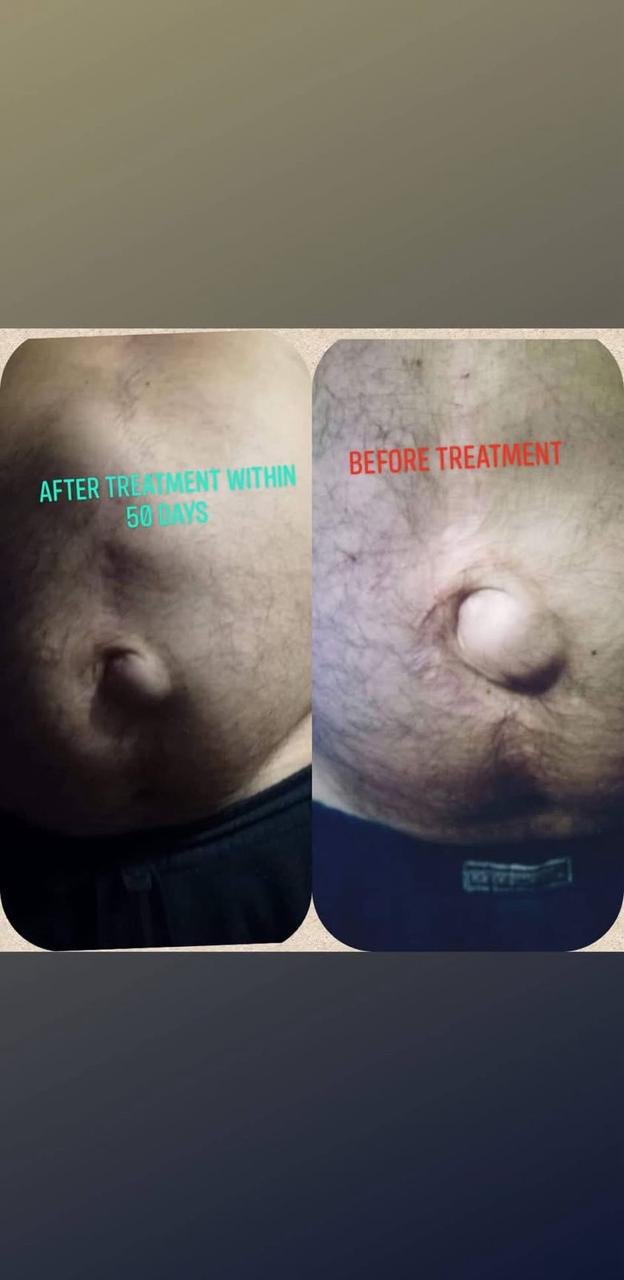
After Treatment
Considering his physical symptoms and emotional traits, a well-indicated classical homoeopathic remedy was selected. Within a few weeks, the transformation was astonishing:
- Reduced bloating
- Diminished hernia pain
- Improved sleep and mood
This case is a testament to the holistic power of classical homoeopathy, which treats not just the symptom, but the person as a whole.
Why Choose Homoeopathy for Hernias?
- Non-invasive and pain-free
- Addresses root causes—both physical and emotional
- Strengthens your body’s natural healing ability
- Prevents recurrence by restoring muscular integrity
- Safe for all ages without side effects
Say Goodbye to Surgery, Naturally
While conventional medicine often suggests surgery as the only solution, homoeopathy provides a gentle, effective, and lasting alternative—especially in early to moderate cases. So before opting for the surgical table, give your body a chance to heal the natural way.
Final Thoughts
A hernia may start as a small bulge, but it shouldn’t be taken lightly. Timely detection and an appropriate treatment plan can help avoid potential complications. And when you choose classical homoeopathy, you’re not just suppressing symptoms—you’re cultivating a deeper, lasting healing.
Homoeopathy: Cure for Sure. No Cuts, Just Care.
Add new comment