
Can a Broken Relationship Cause Broken Skin?
Exploring the powerful connection between emotional trauma, chronic stress, and severe dry eczema.
For one 43-year-old patient, a 15-year battle with severe, chronic dry eczema did not start with a food allergy or environmental trigger — it started with family betrayal.
While skin conditions are often viewed as purely physical illnesses, the connection between our emotions and our skin — known as the skin-brain axis — is incredibly powerful.
The Core Insight
Emotional trauma can trigger long-term inflammatory responses in the body, leading to chronic skin flare-ups that persist for years.
The Patient: Exploitation, Detachment & Inflammation
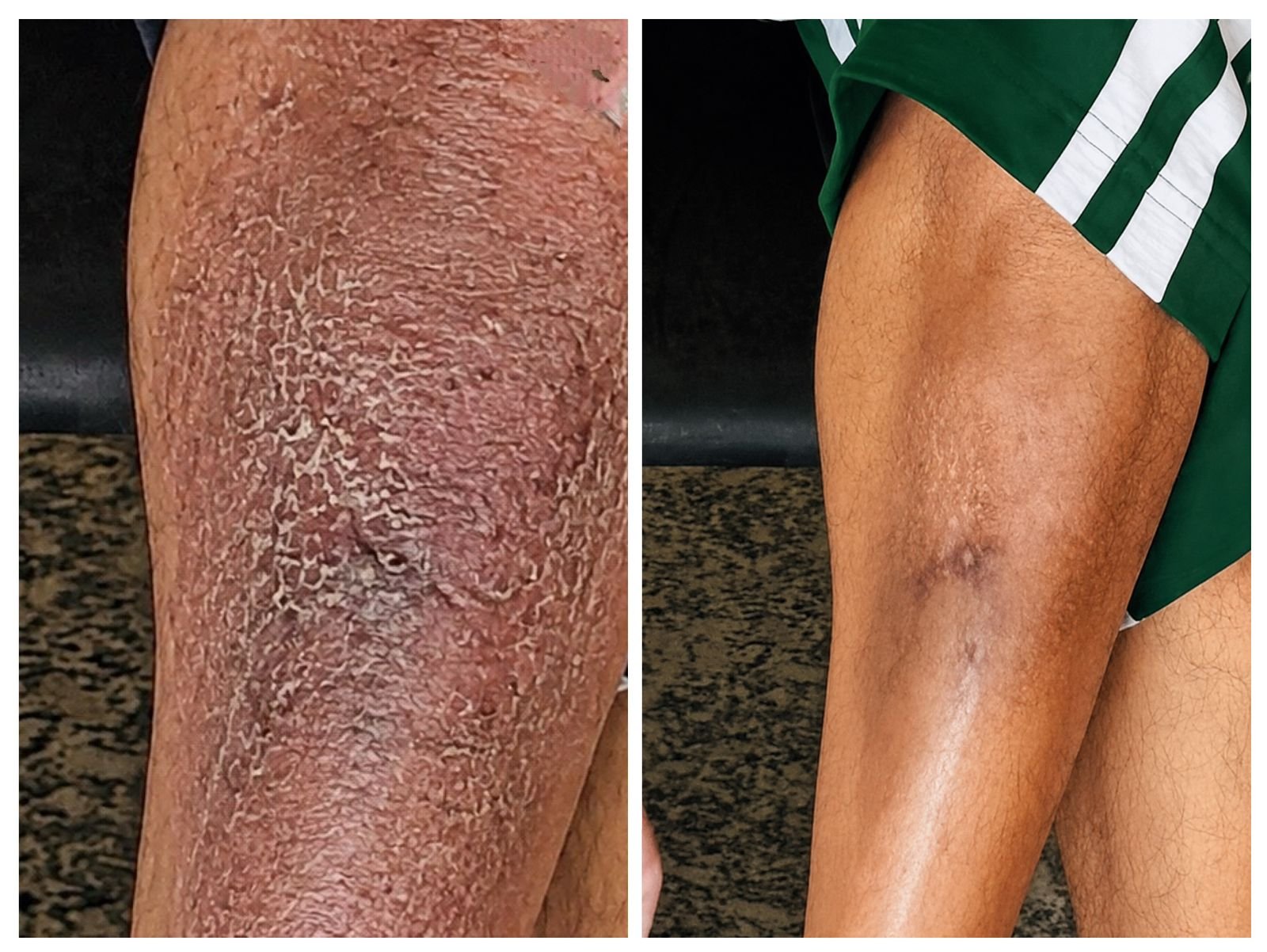
The patient struggled for over a decade with severe, treatment-resistant dry eczema. A deep clinical history revealed that the onset of his skin condition directly coincided with a period of emotional and financial exploitation by close family members.
To protect his mental health, the patient eventually chose complete emotional and physical detachment. However, years of living in a constant fight-or-flight state left his nervous system deeply dysregulated.
“Even after creating healthy boundaries, the body can continue holding onto trauma through chronic inflammation.”
What is Dry Eczema?
Broken Skin Barrier
Dry eczema damages the skin’s protective barrier, making it difficult to retain moisture.
Chronic Inflammation
Stress hormones and inflammatory proteins can worsen itching, redness, and scaling.
Skin-Brain Axis
Emotional stress directly affects the nervous system, influencing skin inflammation and healing.
The Combined Management Strategy
True relief from trauma-induced eczema requires an integrated approach: repairing the skin barrier while calming the nervous system.
1
Barrier Repair via Pure Lipids
- Virgin Coconut Oil: Helps soothe dry skin, reduce inflammation, and support hydration retention.
- Raw Shea Butter: Rich in fatty acids that naturally strengthen the skin barrier.
- Avoid Industrial Creams: Reduces exposure to fragrances, preservatives, and synthetic stabilizers.
- Skin-Safe Habits: Wear cotton clothing, use a humidifier, and avoid harsh soaps.
2
Nervous System Regulation
- Trauma-Informed Therapy: Helps process grief, betrayal, and emotional distress.
- Somatic Down-Regulation: Deep breathing and mindfulness can lower cortisol levels.
- Itch Control: Cold compresses help calm irritated nerve endings naturally.
Before & After Treatment
Healing Your Skin Means Healing From Within
Managing chronic dry eczema requires looking at the whole picture — both your physical skin barrier and your emotional well-being.
Consult a Professional
Speak with a board-certified dermatologist to create a safe and effective treatment plan.
Prioritize Your Peace
Incorporate counseling, mindfulness, or nervous system regulation practices into your routine.
Have You Experienced Stress-Related Skin Flare-Ups?
Share your experience in the comments below or subscribe to our newsletter for more evidence-based skincare insights.
Add new comment